SDA Housing Explained for Participants with Psychosocial Disability
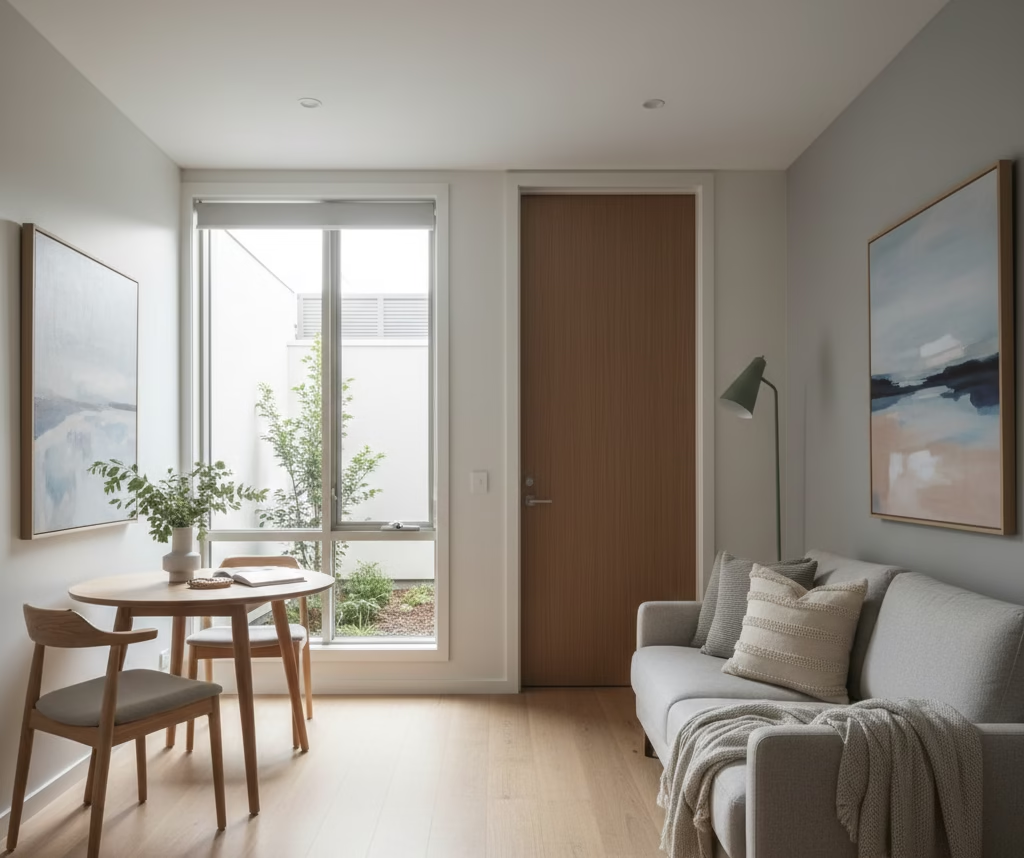
SDA psychosocial disability housing provides specialist living environments that support safety, stability, and long-term wellbeing under the NDIS.
Finding the right living arrangement can be challenging for people living with psychosocial disability. While many participants can live independently with flexible supports, others require specialist housing designed to reduce risk, improve stability, and support long-term wellbeing. This is where Specialist Disability Accommodation (SDA) plays an important role.
This guide explains SDA housing in simple terms, how it supports participants with psychosocial disability, and when it may be the right option under the NDIS.
In many cases, SDA psychosocial disability housing works alongside Supported Independent Living (SIL), which provides daily personal support within the home.
What Is SDA Housing for Psychosocial Disability?
Specialist Disability Accommodation (SDA) refers to purpose-built housing designed for people with extreme functional impairment or very high support needs. Unlike general housing, SDA focuses on the physical design of the home, not daily care support.
In other words, SDA covers the building itself, while other supports such as SIL or Core Supports cover day-to-day assistance.
Importantly, SDA does not replace personal supports. Instead, it works alongside them.
Understanding Psychosocial Disability Housing Needs
Psychosocial disability relates to mental health conditions that significantly impact a person’s ability to function in daily life. Over time, some participants experience challenges such as:
- Difficulty managing daily routines
- Emotional distress triggered by unsafe or unstable environments
- Increased risk during periods of crisis
- Difficulty living independently without consistent structure
As a result, standard housing may not always provide the stability or safety required. Therefore, SDA housing may become a necessary support.
How SDA Supports Participants with Psychosocial Disability
SDA housing supports psychosocial disability by addressing environmental risks, not just support hours.
For example, SDA homes may include:
- Safer layouts that reduce stress and agitation
- Private spaces that support emotional regulation
- Secure environments that reduce risk during crisis
- Designs that support 24/7 on-site or nearby supports
Consequently, participants often experience greater stability, improved safety, and reduced hospitalisation.
SDA vs SIL: for Psychosocial Disability: Understanding the Difference
Many families confuse SDA with Supported Independent Living (SIL). However, they serve different purposes.
SDA focuses on:
- The design and safety of the home
- Long-term housing suitability
- Specialist building features
SIL focuses on:
- Daily living support
- Personal care and routines
- Active staff assistance
Therefore, a participant may live in SDA housing and receive SIL support at the same time, depending on their needs.
Who Is Eligible for SDA Psychosocial Disability Housing?
Not every participant with psychosocial disability qualifies for SDA. Generally, the NDIS considers SDA when a participant:
- Has very high support needs
- Faces significant housing-related risks
- Requires specialist design to live safely
- Experiences repeated housing breakdowns
Additionally, eligibility depends on functional assessments and long-term support needs not diagnosis alone.
Types of SDA Housing Options for Psychosocial Disability
SDA housing is available in different forms, depending on participant needs and preferences:
- Apartments within SDA complexes
- Shared homes with other participants
- Individual dwellings with specialist features
Each option aims to balance safety, independence, and personal choice.
The Role of Support Coordination in SDA Access
Accessing SDA can feel complex. However, Support Coordination plays a key role in guiding participants and families.
For instance, Support Coordinators can:
- Explain SDA eligibility clearly
- Coordinate assessments and reports
- Compare SDA housing options
- Support transitions into new housing
As a result, families avoid confusion and delays during the process.
Final Thoughts
SDA housing can provide life-changing stability for participants with disability who face ongoing housing-related challenges. When the living environment supports safety, privacy, and dignity, participants are better positioned to focus on recovery, routine, and long-term wellbeing.
Ultimately, SDA works best when combined with the right supports, the right environment, and a clear understanding of individual needs.
SDA psychosocial disability supports are funded through the NDIS for participants with very high housing and support needs.
