Is NDIS Registration Worth It for Providers in Australia?
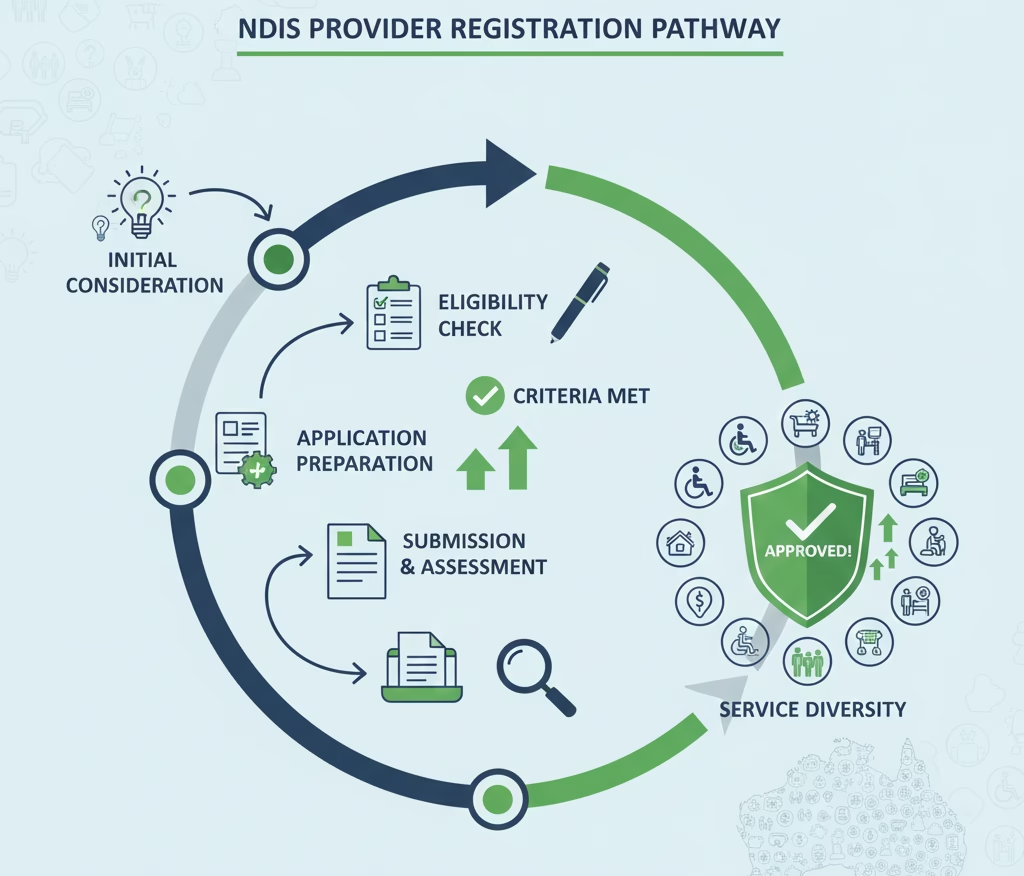
Many people entering the disability sector ask an important question: is NDIS registration worth it. Becoming an NDIS registered provider requires time, effort, and financial investment. However, it also opens access to new participants, funding opportunities, and long-term growth potential. Therefore, understanding the real benefits and challenges of registration helps providers make informed decisions.
This article therefore clearly explains what NDIS registration offers, the costs involved, and ultimately, as a result, whether registration is then the right choice for your business overall.
What Does NDIS Registration Mean?
NDIS registration is the formal approval process managed by the NDIS Quality and Safeguards Commission. Registered providers must meet NDIS Practice Standards and demonstrate ongoing compliance through audits and reviews.
As a result, registration therefore confirms that a provider delivers supports safely, ethically, and in line with national standards overall
Is NDIS Registration Worth It for New Providers?
For many new providers, the answer depends on goals and service types.
Registration is often worth it if you plan to:
- Work with agency-managed participants
- Deliver higher-risk or specialised supports
- Build long-term credibility and trust
- Scale services sustainably
However, for providers offering low-risk supports only, registration therefore may not be immediately necessary overall and in practice.
Key Benefits of Becoming an NDIS Registered Provider
Access to Agency-Managed Participants
Registered providers can support participants whose plans are managed by the NDIA. This significantly expands the potential client base.
As a result, providers often experience more consistent referrals and income
Increased Credibility and Trust
NDIS registration signals quality and compliance. Participants, families, and referrers often prefer registered providers.
Therefore, registration can strengthen reputation and competitive positioning.
Ability to Deliver Higher-Risk Supports
Some supports, such as personal care, Supported Independent Living (SIL), and behaviour support, require registration.
Consequently, registration allows providers to offer higher-value services.
Long-Term Business Growth
Registered providers often benefit from:
- Stronger funding stability
- Clear compliance frameworks
- Easier service expansion
Therefore, registration supports sustainable growth rather than short-term operation.
Costs and Challenges of NDIS Registration
Despite the benefits, registration is not without challenges.
Common challenges include:
- Audit and compliance costs
- Time spent preparing policies and systems
- Ongoing reporting and reviews
- Staff training and screening requirements
As a result, providers must be prepared for ongoing obligations, not just initial approval.
Is NDIS Registration Worth It Financially?
From a financial perspective, registration therefore is often worth it for providers who plan to grow over time.
Registered providers:
- Access more participants
- Generate more consistent revenue
- Offer higher-priced supports
However, success depends on managing costs, staffing, and compliance effectively.
Therefore, registration should be viewed as a long-term investment rather than a quick return.
Registered vs Unregistered Providers: Which Is Better?
Registered Providers
- Work with agency-managed participants
- Meet strict compliance standards
- Face higher setup and ongoing costs
Unregistered Providers
- Work only with self-managed or plan-managed participants
- Face fewer regulatory requirements
- Have limited service scope
As a result, registration offers greater opportunity but also greater responsibility
When NDIS Registration May Not Be Worth It
Registration may not be worth it if:
- You only offer low-risk supports
- You are testing the market short-term
- You lack resources to maintain compliance
- You prefer minimal regulatory oversight
Therefore, each provider should assess readiness carefully.
How LYFIT Supports Providers Through Registration
Many providers choose to work with experienced organisations like LYFIT to manage registration and compliance efficiently.
LYFIT supports providers by:
- Strengthening service delivery systems
- Supporting compliance-focused operations
- Aligning services with NDIS standards
- Helping providers deliver high-quality supports
Consequently, providers reduce risk and improve long-term sustainability.
Providers considering whether registration is the right step can explore how LYFIT’s NDIS services and compliance support helps deliver quality supports while meeting ongoing NDIS requirements.
Official Guidance on NDIS Registration
For authoritative information on registration requirements, providers should refer to official resources:
These sources outline compliance expectations, safeguards, and provider responsibilities.
Is NDIS Registration Worth It Overall?
So, is NDIS registration worth it? For many providers, the answer is yes. Registration creates access, credibility, and long-term growth opportunities. However, it also requires commitment, systems, and ongoing compliance.
Ultimately, registration is worth it for providers who are prepared, strategic, and focused on quality service delivery.
Conclusion
NDIS registration is not mandatory for every provider; however, it therefore offers significant advantages for those aiming to grow and operate sustainably over time. By contrast, through understanding the costs, benefits, and obligations, providers can ultimately decide whether registration aligns with their goals overall.
For providers seeking long-term success in the NDIS sector, registration supported by strong systems and experienced guidance can be a valuable step forward.
